Showing posts with label compress. Show all posts

Thursday, January 2, 2014

How to disinfect a wound while day hiking with children

Should day hiking children be wounded from a fall or other accident, you’ll almost certainly have to treat the injury. That almost always requires disinfecting the wound.

A wound typically is any severe cut of the skin. Internal parts of the body may be exposed. Disinfecting this wound is vital, for the real threat beyond blood loss is an infection setting in.

Stop the bleeding
The first step is to stop the bleeding. This should be done by applying a sterile compress (You should have one in your first-aid kit.) directly to the wound. If the compress soaks through with blood, simply apply another compress directly over it.

If the wound is deep and won’t stop bleeding – this usually is the case when stitches are required – don’t worry about disinfecting the wound. Instead, try to at least slow the bleeding and seek immediate medical attention. The hospital staff applying the stitches will disinfect the wound.

Presuming stitches aren’t needed, once the bleeding is under control, gently remove the compress. If the bleeding resumes, reapply sterile compresses, get the bleeding under control again, and seek immediate medical attention.

Should the bleeding not resume, flush the wound with clean water. Your goal is to get out sand, dirt and debris (such as tiny bits of leaves and dirt) from the wound. Hydrogen peroxide is nice but not necessary for flushing a wound.

Antiobiotic and dressing
Next, apply a triple antibiotic ointment (which also should be in your first-aid kit) to the wound.

Finally, apply clean dressing to the wound. This is best done by applying adhesive bandages in a cross-cross pattern over the length of the cut; be sure to push the wound’s edges together. Then place a sterile wrap over the adhesive bandages.

Keep a close eye on the cut as it heals over the next several days. You don’t want it start to bleeding again, and you don’t want it to become infected. Should either occur, have it looked at by medical professionals.

Find out about trail guidebooks available in the Hittin’ the Trail series.

Thursday, March 8, 2012

How to avoid and treat spider bites on hikes

Brown recluse spider. Photo courtesy
of Indian DNR.
As with mosquitoes, the bite from the spider is mostly just a nuisance. Still, allergic reactions can occur, and a few spiders are downright deadly. The most dangerous spiders are various widows, the brown recluse and tarantulas.

To avoid spider bites, don’t stick hands into dark holes or rocky crevices and don’t turn over rocks. Spiders live in such areas and may bite if surprised and think they’re under attack.

Treat a spider bite by washing the bite area with soap and water. A cold compress can help alleviate the swelling and redness. Diphenhydramine tablets can be taken to reduce the itch while acetaminophen will help relieve severe pain. If a severe reaction occurs or you know the bite was from a poisonous spider, seek immediate medical treatment.

A few don’ts … Aspirin won’t reduce the inflammation of a spider bite and shouldn’t be taken by children. Don’t bother with antibiotics, as they’re not designed for treating spider bites. Finally, don’t cut open the bite mark as it may lead to infection.

Related articles:
g How to avoid and treat mosquito bites
g How to avoid ticks and handle their bites
g Handling bees, hornets, wasps and yellow jackets
g Avoiding and treating chigger bites

Read more about day hiking with children in my guidebook Hikes with Tykes.

Tuesday, January 17, 2012

Handling bees, hornets, wasps on hike

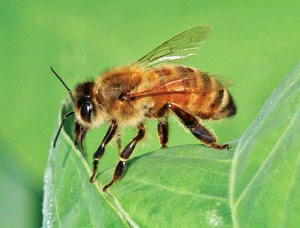
Most bee stings aren't deadly. Photo courtesy of
Wisconsin DNR.
Though most bee stings aren’t deadly, they should be taken seriously. Stings can lead to anaphylactic shock and death.

To avoid being stung, stay away from areas where bees, hornets, wasps and yellow jackets might live. Even if no hive is in sight, you usually can determine their home by watching where they disappear – behind a bush’s or tree’s leafy branches, crawling into a ground hole, or a hollow log opening.

If one flies near your children, they shouldn’t swat at it or run. This may anger the insect into stinging. Instead, remain calm and let it fly away. If it lands on your children, have them brush it off and calmly walk away.

Remove the honeybee stinger by scraping it out with a fingernail (bumblebees, hornets and wasps don’t leave a stinger and can sting repeatedly). Don’t use tweezers on the honeybee stinger as this may release more venom into the skin. Carry oral Benadryl to slow allergic reactions. However, if a severe reaction occurs – such as a bad swelling and rash in areas where the sting didn’t occur, especially on the eyes and mouth – seek medical attention immediately. If the child is allergic to bee and wasp stings, be sure to carry prescribed medications to treat it. A cold compress can be placed on the spot to reduce minor swelling.

Read more about day hiking with children in my guidebook Hikes with Tykes.