
Walking sticks offer several benefits, especially with carrying children
Also known as walking sticks, hiking sticks or walking poles, trekking poles are necessary for maintaining stability on uneven or wet surfaces and to help reduce fatigue. The latter makes them useful on even surfaces. By transferring weight to the arms, a trekking pole can reduce stress on knees and the lower back, allowing you to maintain a better posture and to go farther.
Trekking poles have some other benefits beyond keeping your balance. If forced to stay the night in the wilds, a stick can be used to build a makeshift tent. It also can be used to fight off attacking animals.
As an adult with a baby or toddler on your back, you’ll primarily want a trekking pole to help you maintain your balance, even if on a flat surface, and to help absorb some of the impact of your step.
Qualities of a good trekking pole
Graphite tips provide the best traction. A basket just above the tip is a good idea so the stick doesn’t sink into mud or sand. Angled cork handles are ergonomic and help absorb sweat from your hands so they don’t blister. A strap on the handle to wrap around your hand is useful so the stick won’t slip out. Telescopic poles are a good idea as you can adjust them as needed based on the terrain you’re hiking and as kids grow to accommodate their height.
The pole also needs to be sturdy enough to handle rugged terrain, as you don’t want a pole that bends when you press it to the ground. Spring-loaded shock absorbers help when heading down a steep incline but aren’t necessary. Indeed, for a short walk across flat terrain, the right length stick is about all you need.
When hiking, take off any tip protectors that come with the pole. Usually these protectors are included so the sharp tip doesn’t cut or scratch other objects while you’re traveling. You probably don’t need such a sharp tip on a pole when hiking with kids, children, but should you have one, definitely make sure kids don’t horse around with the pole.
You may have seen pictures of hikers using two trekking poles, as if they were skiing. Having two poles works well on long backcountry treks and over steep terrain, but you probably will only need one pole on your day hike. I myself like to have one hand free in case I need to hold my child’s hand or help him up or down an embankment.
Trekking poles for children
Children don’t really need trekking poles unless tackling steep or uneven terrain, but they’ll likely want one to look like an adult. Kids as young as three can use trekking poles. You will need to adjust it to their height, though.
If buying a trekking pole for a child, make sure the grip isn’t too large for them, as children have smaller hands than adults. Next check the length. Holding the child’s arm out at a right angle (with the elbow the bend) in front of them, adjust the pole length so that the tip reaches the child’s ankle.
You’ll have to show most children how to use the trekking pole, or they’ll soon be dragging them behind them. Prepare for younger kids to misuse trekking poles, which they find are great for whacking plants, trees, rocks and even siblings.
Also be prepared to eventually carry a young child’s trekking pole, even if they’re still on the ground. They’ll grow tired of carrying it (or playing with it). Velcro leather pieces that bicyclists use for their wrists are perfect for securing their trekking pole to a carrier or backpack.
Read more about day hiking with children in my Hikes with Tykes guidebooks.


Wednesday, August 29, 2012
A basic guide to planning a hike with kids
 |
| Good planning will ensure smiles on your day hiking child's face - as well as yours! |
When selecting a destination, remember that not all kids are made alike. The five-year-old neighbor boy may have had no trouble with a specific trail, but your five-year-old may not like it or be able to handle it. There’s nothing wrong with that. We’re all different and develop at our own rates.
For your first few hikes, stick to short, well-known trails where you’re likely to encounter others. Once you get a feel for hiking and your kids’ abilities and interests, expand to longer and more remote trails.
Until they enter their late teens, children need to stick to trails rather than going off-trail hiking, which is known as bushwhacking. Children too easily can get lost when off trail. They also can easily get scratched and cut up or to stumble across poisonous plants and dangerous animals. Always check to see what the weather will be like on the trail you plan to hike. While an adult might be able to withstand wind and a sprinkle here or there, for children it can be pure misery. Dry, pleasantly warm days with limited wind always are best when hiking with children.
Don’t choose a trail that is any longer than the youngest child in your group can hike. Adults in good shape can go 8-12 miles a day; for kids, it’s much less. There’s no magical number. Ask other parents what their children can do, and you’ll get a whole range of answers. The reality is that every child is different: different leg lengths, different attitudes toward hiking, different levels of physical fitness, different levels of physical development, different expectations about being carried, and more.
When planning the hike, try to find a trail with a mid-point payoff – that is something kids will find exciting about half-way through the hike. This will help keep kids’ energy and enthusiasm up during the journey.
Generally, kids will prefer a circular route to one that requires hiking back the way you came. The return trip often feels anti-climatic, but you can overcome that by mentioning features that all of you might want to take a closer look at.
Once you select a trail, map out your route. Using a light, transparent highlighter that won’t obscure details, trace the trail on your map. This will make navigating the path easier once in the field.
Read more about day hiking with children in my Hikes with Tykes guidebooks.
Friday, June 1, 2012
Statistical oddity: Animal attacks on hikes
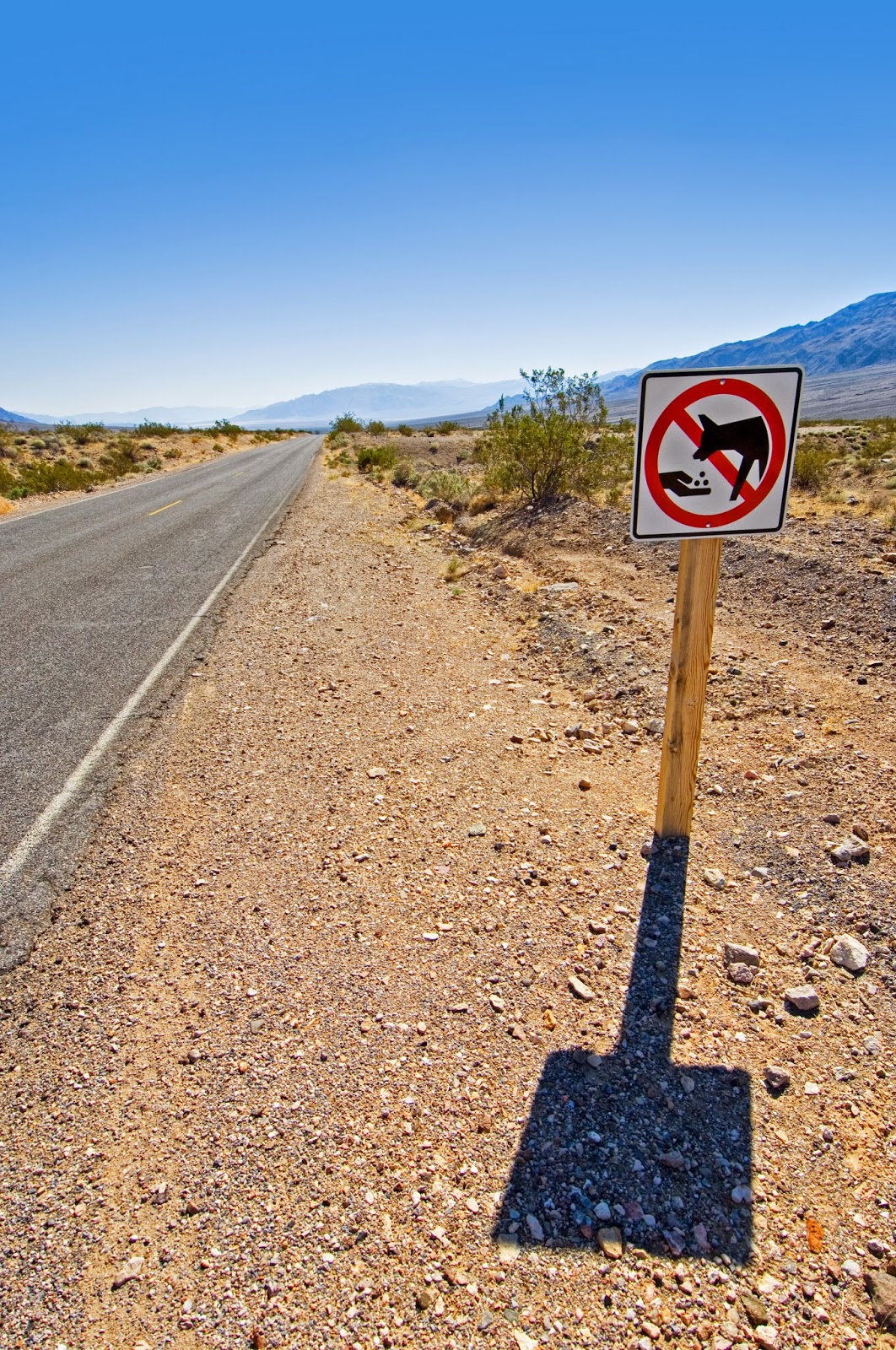 Injuries from animals are rare but do occur on hikes. To avoid becoming one of those statistical oddities, keep your distance from the local fauna. Never feed or approach wildlife.
Even if docile, the animal may bite when you get close to it. If it is sick, and a bite occurs, the child could contract a disease. If there are reports in an area of dangerous animals attacking people, don’t hike there.
Upon returning to your vehicle, always report aggressive animals to authorities. Bears and mountain lions may have to be removed from the area to prevent attacks on humans.
Read more about day hiking with children in my guidebook Hikes with Tykes.
Monday, May 28, 2012
Don't presume livestock on trail are docile
 |
| Photo courtesy of Wisconsin DNR. |
Read more about day hiking with children in my guidebook Hikes with Tykes.
Tuesday, May 22, 2012
Don't attempt to rescue trapped animals
 |
| Do not attempt to release trapped animals found during a hike; instead, report it to a park ranger or authorities. Photo courtesy of Wikipedia. |
Should you see a trapped animal – or traps of any kind on public lands – immediately report it to the park ranger or authorities. The trap probably has been illegally set.
Read more about day hiking with children in my guidebook Hikes with Tykes.
Saturday, May 19, 2012
How to avoid rabid animals on a day hike
 |
| Raccoons account for a large percentage of rabies cases in people. Photo courtesy of Maryland DNR. |
You can avoid rabies by not trying to feed wild animals, which invites bites. Also, stay away from animals that show signs of having rabies; for example, if you see a nocturnal animal wandering around during daylight hours (and the list of common carriers above are mainly nocturnal), rabies is a distinct possibility for their behavior. Other signs of rabies are animals that are unsteady on their feet, that have lost their natural fear of man, or that behave oddly.
If bitten by a rabid animal (or any animal for that matter), get immediate medical attention.
Read more about day hiking with children in my guidebook Hikes with Tykes.
Monday, May 7, 2012
Leave alone young animals found day hike
 |
| Resist the temptation to interact with newborns found along the hiking trail. |
Newborns can bite just as well adults – or worse, the mother may be nearby and become very agitated by your interest. In addition, the newborn may be ill, which could result in your children picking up the disease.
Also, sometimes mothers will not return to their newborns if humans stay around too long, as can be the case with white-tailed deer.
Read more about day hiking with children in my guidebook Hikes with Tykes.
Monday, April 30, 2012
Avoid hoofed animals when hiking with kids
 |
| Bison bull. Photo courtesy of NPS. |
Usually the problem is people who mistakenly think that herbivores can’t be dangerous and provoke the beasts by getting too close or by cornering them. This is an issue especially if the hoofed animal has young nearby. Their antlers and horns, not to mention their hooves, can be quite lethal.
You can avoid the danger simply by keeping your distance. Don’t try to feed them or get close for a snapshot. Once you see an agitated animal – especially one that’s pawing its hooves at the ground and huffing as staring at you – back off.
Read more about day hiking with children in my guidebook Hikes with Tykes.
Sunday, April 22, 2012
How long will day hike with kids take?
 Just how long will your entire day hiking adventure with kids take?
To determine that, add three elements: drive time, walking time, and rest stops. Drive time usually is easy to figure out, though be aware that if heading into mountains, curvy and steep roads will force you to go slower. That means a longer drive time. For walking time, you’ll go much slower than you would if hiking on your own or with other adults. Kids on your back probably will increase your walk time by 25%; kids on foot will increase it by 50% until their late teens, when they’ll probably outpace you. Finally, set aside 10-15 minutes for each rest stop on the hike, stopping every half hour for toddlers, preschoolers and early elementary school aged-children and every hour for older children and teens. Of course, you may need to make more frequent stops, but don’t do any less.
This hike now must be positioned during certain hours of the day depending on your children’s habits. Most importantly, consider when your kids eat meals and take naps. You’re trying to squeeze hikes between these major daily events in a child’s life.
For infants, this is not such a big deal as the child can be fed during rest stops, and the rhythm of your walk likely will lull him to sleep. For toddlers eating solid meals and needing the comfort of a mattress, however, it’s a bit more complicated. You don’t want to arrive at the trailhead a half-hour before lunch time. This all becomes less of an issue as the children enter school; if the hike crosses meal time, simply plan a picnic lunch. Regardless of age, make sure kids have eaten a complete meal before heading out on the road.
You also want to get back to you vehicle before darkness falls. Children hiking at night is inadvisable, as the difficulty in seeing increases the chance of falling, of missing a turnoff in the trail and getting lost, and of keeping track of children. Many animals also hunt at night, so there is a greater chance of being bitten.
That being said, group night hikes, led by rangers and park docents, are a lot of fun and very educational – but the trails on such hikes usually are wide and well maintained, and you’re probably with a highly experienced hiker who knows the area extremely well.
Read more about day hiking with children in my guidebook Hikes with Tykes.
Saturday, April 21, 2012
Set aside fear of wolf, coyote attack on hike
 |
| Coyote. Photo courtesy of Michigan DNR. |
Wolves really aren’t a danger to hikers. They are highly reclusive and being endangered you are very unlikely to ever encounter them unless heading deep into the backcountry.
Coyote attacks also are rare and – ironically – are more likely to occur in built-up areas where their habitat has been wiped out. Should you see a coyote in the wilds, don’t try to get any closer. Don’t run either, especially if a child, since that may invite an aggressive coyote to strike. Should it attack, yell at it. If bitten by a coyote – even if just a nip – get immediate medical attention.
Read more about day hiking with children in my guidebook Hikes with Tykes.
Saturday, April 14, 2012
How to get rid of a skunk's spray
 |
| Striped skunk. Photo courtesy Illinois DNR. |
Stay away from areas where skunks might live or hang out, such as brush piles and beneath fruit trees. If you smell a skunk, move away from the area. If you see one, back away slowly.
Should you be sprayed, mix 1 quart of hydrogen per-oxide, a 1/4 cup baking soda and 1 teaspoon of liquid hand soap in a bucket. Starting at the crown of the head, pour the mixture onto the sprayed child and rub it into the skin (including where there’s hair). Don’t get it in the eyes, mouth or nose, though.
Dispose of the sprayed clothes, as the scent can’t be laundered out.
Read more about day hiking with children in my guidebook Hikes with Tykes.
Monday, April 9, 2012
Research before hiking in unfamiliar area
 |
| Black bear. Photo courtesy Great Smoky Mountains NPS. |
Recalls parent Vera E., of Burlington, Vt.: “We took a hike in northern Vermont during the fall when the foliage was a blaze of colors. I guess I was a little too taken in because I didn’t pay attention to what the trees were telling me: We were walking into bear country. The trail wound through beechnut, apple, and cherry, all of which produced fruits that bears gorge on as they near hibernation.
“When we spotted a big sow just off the trail, we froze. Luckily we were downwind from it and were able to turn back with incident.”
Read more about day hiking with children in my guidebook Hikes with Tykes.
Sunday, April 8, 2012
How to avoid, fend off a mountain lion attack
 Usually cougars, also known as mountain lions, don’t want to be seen and will remain hidden, but there are stories of hungry lions that have attacked humans.
Watch for signs of cougars, like paw prints, droppings, claw marks on trees or the smell of carrion. If you see any of these indications, turn back.
If you encounter a cougar, as with bears don’t turn your back to it but keep your space and give it time to retreat. Gather your group into a single cluster and get noisy. If the cougar approaches, wave you trekking poles and shout. You want to appear big to intimidate it, so don’t crouch, bend over or down to pick up children, or run. All of those moves make you look smaller. If children are about to panic and run, though, then it’s usually smarter to grab them.
If a cougar does attack, fight back in any way you can. Remember that the lion almost certainly will be stronger and faster than you. Try to protect your neck and head when doing so (in short, good luck).
Read more about day hiking with children in my guidebook Hikes with Tykes.
Saturday, March 24, 2012
How to avoid, deal with creepy crawlies
 |
| Carpenter ant. Photo courtesy of Wisconsin DNR. |
g Ants – Their bites can leave a sting, and their crawling all about you also can be annoying. Avoid them by being careful not to toss your gear on an ant hill or by sitting against a tree with sap, which ants may feed upon.
g No-see-ums – These tiny biting flies live near water and sometimes fly in swarms. You can avoid them by wearing insect repellent and moving away from swarms. Their bites are innocuous beyond the itch and the some-times 1-2 inch red swelling. Don’t scratch the swelling or it could become infected.
g Horseflies – Generally the bite is harmless, but it can be painful. Clean the bite area with soap and water. A topical hydrocortisone cream usually will reduce both the swelling and itching. Liquid antihistamine (or for adults, a tablet) also can help.
g Gnats – Gnat bites are benign as well, minus the itching and swelling. Use calamine lotion to soothe the itching and don’t scratch it.
Related articles:
g How to avoid and treat mosquito bites
g How to avoid ticks and handle their bites
g Handling bees, hornets, wasps and yellow jackets
g Avoiding and treating chigger bites
Read more about day hiking with children in my guidebook Hikes with Tykes.
Saturday, March 17, 2012
How to avoid, treat scorpion stings on a hike
 |
| Most scorpions are not dangerous. Photo courtesy of Illinois DNR. |
You can avoid a scorpion sting by not sticking hands into dark holes and rocky crevices and not turning over rocks, all of which could be homes for these little arthropods.
If stung, you’ll feel instant pain or burning, numbness and tingling, and the bitten area will be sensitive to touch.
Treatment includes washing the stung area with soap and water then applying a cold compress it. You also should elevate a stung limb above heart level. Always bring a young child stung by a scorpion to the emergency room. For older teens, if reactions in addition to those previously listed appear, then bring them as well to the ER.
Read more about day hiking with children in my guidebook Hikes with Tykes.
Thursday, March 8, 2012
How to avoid and treat spider bites on hikes
 |
| Brown recluse spider. Photo courtesy of Indian DNR. |
To avoid spider bites, don’t stick hands into dark holes or rocky crevices and don’t turn over rocks. Spiders live in such areas and may bite if surprised and think they’re under attack.
Treat a spider bite by washing the bite area with soap and water. A cold compress can help alleviate the swelling and redness. Diphenhydramine tablets can be taken to reduce the itch while acetaminophen will help relieve severe pain. If a severe reaction occurs or you know the bite was from a poisonous spider, seek immediate medical treatment.
A few don’ts … Aspirin won’t reduce the inflammation of a spider bite and shouldn’t be taken by children. Don’t bother with antibiotics, as they’re not designed for treating spider bites. Finally, don’t cut open the bite mark as it may lead to infection.
Related articles:
g How to avoid and treat mosquito bites
g How to avoid ticks and handle their bites
g Handling bees, hornets, wasps and yellow jackets
g Avoiding and treating chigger bites
Read more about day hiking with children in my guidebook Hikes with Tykes.
Friday, February 24, 2012
How to avoid, treat chigger bites on hike
 |
| Chiggers can leave bites that are maddeningly itchy. |
Unfortunately, chiggers are so small they can’t be seen by the unaided eye. To keep them off you, apply insect repellent to ankles, the waist and wrists. Sublimed sulfur is particularly effective (be forewarned that sulfur will make you smell quite unpleasant). Wear tightly woven clothes, long-sleeve shirts buttoned tightly at the wrist, pants rather than shorts, high shoes or boots, and tuck pants into the boots. Avoid going into low, damp areas where chiggers reside, especially on warm afternoons, as chiggers are active when the ground temperature is between 77 degrees and 86 degrees. Stay to the center of the trail as chiggers usually reside in tall grass and brush. Wash your clothes as soon as you get home as chiggers can linger on fabric and bite you later.
There is no cure for a chigger bite other than time. Lotions can reduce the itching somewhat but applying a local anesthetic such as Benzocaine is effective for several hours.
Related articles:
g How to avoid and treat mosquito bites
g How to avoid ticks and handle their bites
g Handling bees, hornets, wasps and yellow jackets
Read more about day hiking with children in my guidebook Hikes with Tykes.
Wednesday, February 1, 2012
Avoid, treat mosquito bites when on the trail
 |
| Photo courtesy of Wisconsin DNR. |
To avoid mosquito bites, stay away from water at dusk and early evening when the bugs tend to come out. You also can wear hats with flaps and tie a loose bandana around the neck to keep the pesky little critters away. Don’t hike in areas heavily infested with mosquitoes, such as near old tire dumps that can hold sitting water and thus are the bug’s breeding grounds. Finally, if you see a swarm of mosquitoes, expect there to be more swarms and move away.
Treat a mosquito bite as you would a typical bug bite: wash with soap and water, apply an anti-itch cream, hydrocortisone or Neosporin with Lydocain, and don’t itch.
Read more about day hiking with children in my guidebook Hikes with Tykes.
Subscribe to:
Posts (Atom)