|
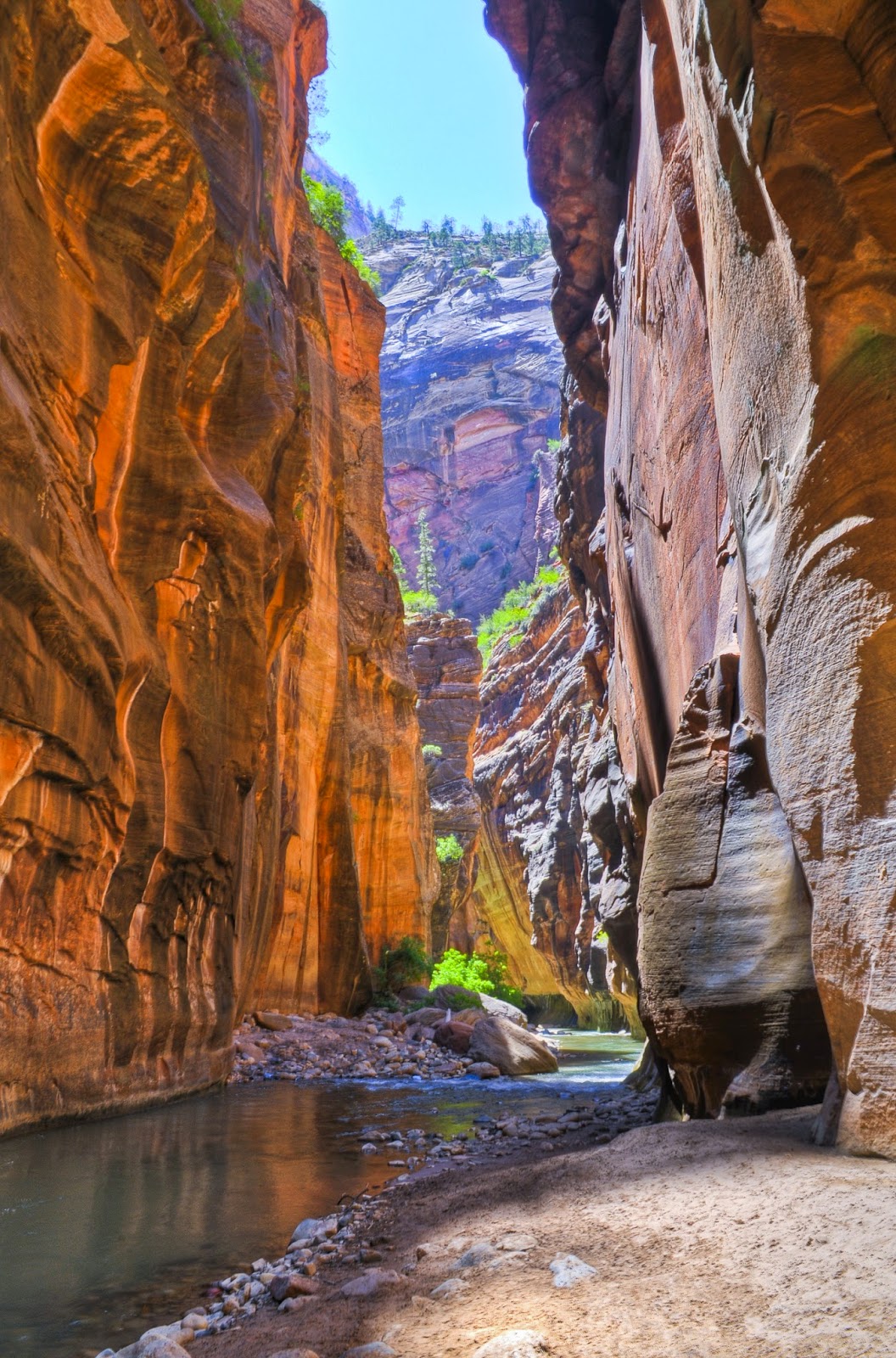
| The Watchman from the Watchman Trail in Zion National Park. |
 |
| Topo map, the Watchman Trail. |
Watchman Trail heads up canyon wall in Zion NP
Hikers can see several of Zion National Park’s exotic geological formations on the short Watchman Trail.
The trail runs 2.8-miles round trip through Zion Canyon in the Utah park. Among the sights are The Watchman, the Towers of the Virgin, the Altar of Sacrifice, and the West Temple.
Though located in the desert, the trail can be done year round. During summer, however, avoid the midday heat by hiking it early in the morning or early evening.
Virgin River
To reach the trailhead, from Interstate 15 in St. George take Utah Hwy. 9 (aka as the Zion-Mt. Carmel Highway) to the park’s south/west entrance. Once past the ranger station, take the first road heading right/southeast for the Zion Canyon Visitor Center. After crossing the Virgin River, take the next left and park in the large lot. Take one of the access trails on the lot’s northwest side to the Watchman Trail. Go right/northeast on the trail.
You’re starting at 3963 feet elevation and paralleling the Virgin River. For 15 miles in the park, the Virgin River cuts through cream, pink and red rock representing 150 million years of Earth history, leaving soaring towers, spectacular spires, and imposing monoliths.
Once the trail veers away from the river, it crosses a park road and climbs up the canyon wall beneath Bridge Mountain. The route does get steep. Along the way, you’ll pass junipers, pinion pines, and prickly pear cactus.
Finally, at 456 feet above the canyon floor, the trail reaches the viewpoint. The vista is worth the effort. From here, you can see several of the park’s major geological formations.
Vista sights
To the south is the Watchman, a red mountain that rises 2,200 feet above the viewpoint. It is perhaps the park’s most photographed geological feature.
Directly across the canyon to the east is Mount Kinesava, which tops out at 7285 feet. Hoodoos sit near the mountain’s top, and petroglyphs can be seen on the trail leading to its peak.
To Kinesava’s right/north is The West Temple. The highest exposure of the famous Navajo sandstone – the thick, usually red rock making up Zion's steep cliffs – can be seen on the mountain. This peak reaches 7810 feet elevation.
Right of The West Temple and northwest of the viewpoint is the Towers of the Virgin formation. The Altar of Sacrifice peaks out at 7505 feet in the Towers. A deep stain on the Altars stone looks like blood.
Looking north is The Sentinel, which tops out at 7157 feet. To the northeast is The East Temple, which rises to 7709 feet.
Short loop
To get a slightly closer view of these features, you can take a 0.3-mile loop that leaves from the viewpoint.
The viewpoint is a great spot for a picnic. After enjoying lunch and taking in the sights, retrace your steps back to the lot.
Learn more about national park day hiking trails in my Best Sights to See at America’s National Parks guidebook.